

Sore muscles can make it harder to stay active, even when your workout routine is going well. The right recovery tool can help you care for tight areas, loosen stiff muscles, and make post-workout care feel easier to manage at home. Some tools are simple and low-tech, while others use compression, heat, vibration, or massage. For individuals who want better support after lifting, running, cycling, or long active days, it’s essential to compare the top recovery tools available.
How These Recovery Tools Were Ranked
This ranking focuses on everyday usefulness, ease of use, body coverage, portability, and how well each tool fits common recovery needs. A recovery tool should be easy enough to use often, not just impressive on paper. It should also match the problem you are trying to solve, whether that is sore legs, tight hips, stiff shoulders, lower-back tension, or limited mobility.
Muscle soreness that appears after a hard workout is often linked with tenderness, stiffness, weakness, and reduced range of motion. Soreness that lasts a week or more, feels severe, or seems like an injury should be checked by a healthcare provider instead of treated only with at-home tools.
Rank Table: Top Recovery Tools Compared
| Recovery Tool | Best For | Why It Stands Out |
|---|
| 1 | Therabody Theragun PRO Plus | Deep muscle massage and full-body recovery | Combines percussive therapy with heat, vibration, LED, and guided breathwork features. |
| 2 | Hyperice Normatec 3 Legs | Heavy legs after running, lifting, or sports | Uses dynamic air compression for leg recovery sessions. |
| 3 | TriggerPoint Foam Roller | Large muscle groups and daily mobility | Uses a hollow core, EVA foam surface, and textured GRID pattern. |
| 4 | Hyperice Venom 2 Back | Lower-back warmth and vibration | Uses heat and vibration in a wearable back wrap. |
| 5 | OPTP Stretch Out Strap | Flexibility and controlled stretching | Uses multiple loops for deeper, more controlled stretching. |
| 6 | TriggerPoint Massage Ball | Feet, glutes, shoulders, and small tight spots | Uses layered foam construction for focused self-massage. |
| 7 | Tiger Tail Original Massage Stick | Quick rolling without getting on the floor | Designed as a portable handheld massage stick for upper- and lower-body use. |
1) Therabody Theragun PRO Plus: Best Overall Recovery Tool
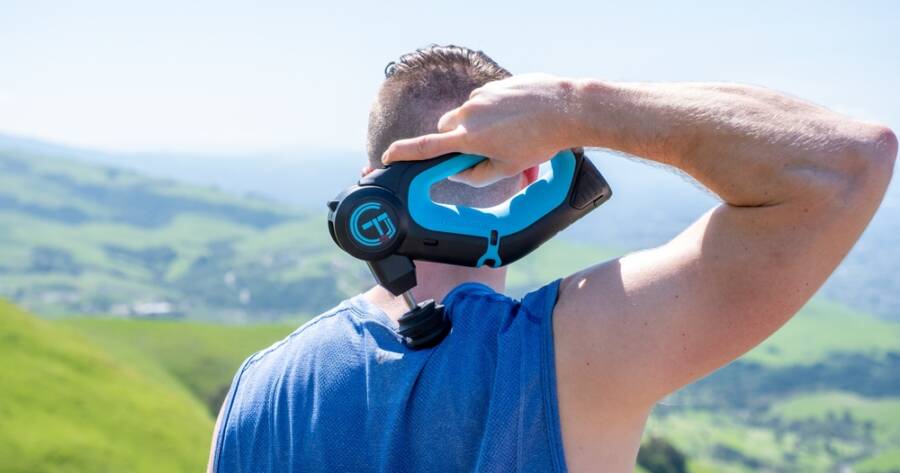
The Therabody Theragun PRO Plus earns the top ranking because it covers many recovery needs in one device. It combines percussive massage with heated percussive therapy, vibration therapy, LED therapy, and biometric breathwork features. That makes it useful for people who want one main tool for sore legs, tight shoulders, stiff backs, and post-workout muscle care.
Its biggest strength is control. You can move the device from one muscle group to another and adjust the session based on how sore or tight you feel. It also makes sense for active people who want a strong home recovery tool without booking frequent massage appointments.
This is not the simplest tool on the list. It has more features than many casual users need, and it may feel like too much for people who only want light recovery after walks or short workouts. Still, for frequent exercisers, strength-training fans, and athletes, it offers the most complete mix of power and flexibility.
2) Hyperice Normatec 3 Legs: Best For Tired Legs
The Hyperice Normatec 3 Legs ranks second because it gives targeted support for people whose legs take most of the workload. The system uses dynamic air compression in leg attachments, making it a strong fit after running, cycling, lower-body lifting, court sports, or long standing days.
The main benefit is that it does not require much effort from the user. You sit down, put on the leg attachments, choose a session, and let the compression cycle do the work. That can be helpful after hard training days when you do not want to roll, stretch, or hold a massage gun.
Its downside is focus. This is mainly a leg recovery system, so it is not the best first choice if your biggest problems are shoulder tightness, upper-back stiffness, or general full-body soreness. It also takes up more space than a roller, strap, or massage ball.
3) TriggerPoint GRID 2.0 Foam Roller: Best Classic Mobility Tool
The TriggerPoint GRID 2.0 Foam Roller ranks third because it is simple, durable, and useful across many areas of the body. It has a hollow core design, an EVA foam surface, and a textured GRID pattern made to copy different massage pressures.
A foam roller is especially helpful for large muscle groups like calves, quads, hamstrings, glutes, and upper back. It is also easy to fit into a warmup, cooldown, or evening mobility routine. Foam rolling uses body weight and slow pressure, so you can control how intense each session feels.
This tool is less direct than a massage gun and less passive than compression boots. It also requires floor space and enough mobility to get into position. Still, for many homes, a quality foam roller is one of the most useful starting points for recovery and mobility work.
4) Hyperice Venom 2 Back: Best Heat And Vibration Tool
The Hyperice Venom 2 Back ranks fourth because it targets a common problem area: the lower back. It uses heat and vibration in a wearable wrap, which makes it different from rollers and massage guns. Heat can be useful for stiff joints and sore muscles, while cold is often used for acute injuries.
This tool is a strong choice for people who feel tight after lifting, sitting, travel, or long workdays. Because it wraps around the body, it can be easier to use while resting than a handheld device. It also gives a more focused experience than a standard heating pad because it adds vibration.
It is not a full-body tool, though. Its value depends on how often your back feels tight or sore. If your main recovery needs are calves, hips, feet, or shoulders, another tool may be a better first buy.
5) OPTP Stretch Out Strap: Best For Controlled Stretching
The OPTP Stretch Out Strap ranks fifth because mobility is not only about massage. This woven strap has multiple loops that help users stretch major muscle groups with better control than unaided stretching.
It is especially useful for hamstrings, calves, hips, shoulders, and gentle range-of-motion work. The loops make it easier to hold a stretch without gripping hard or pulling too far. That can help users stay steady and move gradually instead of forcing a stretch.
The main limit is that it does not massage sore tissue or deliver pressure on its own. It works best when paired with a foam roller, massage ball, or warmup routine. For people who want better flexibility and a simple tool that fits in a drawer or gym bag, it is still a smart recovery pick.
6) TriggerPoint MB1 Massage Ball: Best For Small Tight Spots
The TriggerPoint MB1 Massage Ball ranks sixth because it reaches places that larger tools often miss. It is made with layered foam construction and is designed for focused soft-tissue work. That makes it useful for feet, glutes, shoulders, pecs, and other small tight areas.
A massage ball can be used against the floor, a wall, or a firm chair. This makes it easier to control pressure than some larger tools. It is also small enough to keep in a desk drawer, gym bag, or travel bag.
The trade-off is coverage. A massage ball is not the best tool for rolling both legs quickly or handling a full-body session. It works best as a detail tool for knots and small areas after broader work with a roller, strap, or massage gun.
7) Tiger Tail Original 18-Inch Massage Stick: Best Quick Manual Roller
The Tiger Tail Original 18-Inch Massage Stick ranks seventh because it is easy to use without getting on the floor. It is a portable handheld massage stick made for upper- and lower-body massage.
This tool works well for calves, quads, hamstrings, forearms, and shoulders. It is also a good option for people who find foam rolling uncomfortable or hard to position. Because you control the pressure with your hands, it can feel less awkward than using body weight on a roller.
Its main weakness is that it may not reach as deeply as a strong massage gun or a firm roller. It is best for quick daily care, light soreness, and warmup or cooldown support. For serious tightness, it may work better as a companion tool than a main recovery device.
Which Recovery Tool Should You Choose First?
The best first recovery tool depends on your main problem. If you want one powerful full-body tool, the Therabody Theragun PRO Plus is the strongest overall pick. If your legs feel heavy after training, the Hyperice Normatec 3 Legs is the better focused choice. If you want a simple tool for many muscle groups, the TriggerPoint GRID 2.0 Foam Roller is a practical place to start.
For back tightness, the Hyperice Venom 2 Back is more targeted. For mobility, the OPTP Stretch Out Strap is simple and useful. For small knots and foot work, the TriggerPoint MB1 Massage Ball is a smart add-on. For fast rolling without floor work, the Tiger Tail massage stick is the easiest manual option.
Build A Recovery Kit Around Your Body
The best recovery tool is not always the most advanced one. It is the one that matches your body, your workouts, and the kind of soreness you feel most often. A runner may get more use from compression boots, while a lifter may prefer a massage gun and stretch strap. Someone with daily back tightness may value heat and vibration more than a full foam rolling setup.
For most people, the strongest recovery kit combines one broad tool and one targeted tool. A foam roller plus a massage ball is simple and affordable. A massage gun plus a stretching strap offers more control. Compression boots or a heated back wrap can make sense when your recovery needs are more specific. The goal is not to collect every tool. The goal is to make recovery easier to repeat after the workouts and long days you already do.