

Staying active does not always require fast movements or heavy equipment. Isometric exercises offer a simple way to build strength by holding your body in a fixed position. Such exercises are easy to do at home and can fit into almost any routine. Many people use them to improve strength, stability, and control without needing a gym. With the right approach, isometric training can support both beginners and experienced fitness routines.
Understanding Isometric Exercises
Isometric exercises involve holding a position where your muscles stay engaged without changing length. Unlike movements such as lifting or running, there is no visible motion during the exercise. Instead, your muscles work by staying tight and stable for a set period of time.
This type of exercise can be done almost anywhere. You do not need machines or weights, although they can be added if desired. The focus is on control and consistency rather than speed. Because of this, isometric exercises are often used to build strength in a steady and controlled way.
They are also useful for improving balance and posture. By holding positions, your body learns how to stay stable, which can support everyday movements like standing, walking, or lifting objects.
The Most Effective Isometric Postures
Several common postures are widely used in isometric training. One of the most popular is the plank. In this position, you hold your body in a straight line while supporting yourself on your arms and toes. This works the core, shoulders, and back at the same time.
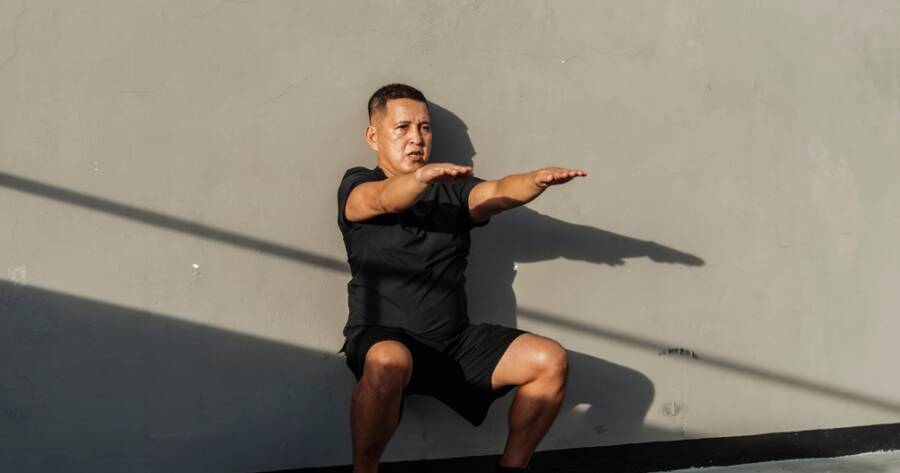
Wall sits are another effective option. You stand with your back against a wall and lower your body as if sitting in a chair. This posture targets the legs, especially the thighs, and helps build lower body strength.
Another simple posture is the glute bridge hold. Lying on your back with your knees bent, you lift your hips and hold the position. This works the hips and lower back. For the upper body, a push-up hold can be used by pausing halfway through a push-up and maintaining the position.
These postures are easy to adjust based on your fitness level. You can hold them for shorter or longer periods, depending on your strength and comfort.
Health Benefits of Isometric Training
Isometric exercises offer several benefits that support overall health. One of the main advantages is improved muscle strength. Even without movement, holding a position places steady tension on the muscles, which helps build strength over time.
They are also gentle on the joints. Because there is no repeated motion, there is less stress on areas like knees and shoulders. This makes isometric exercises a good option for people who want a low-impact workout.
Another benefit is improved posture. Many isometric exercises focus on the core and back, which helps support proper alignment. Better posture can reduce discomfort and improve how your body feels throughout the day.
These exercises can also help build endurance. Holding a position for longer periods trains your muscles to stay active without fatigue. This can support both fitness goals and everyday activities.
How to Add Isometric Exercises to Your Routine
Adding isometric exercises to your routine is simple. You can start by choosing two or three postures and holding each for 20 to 30 seconds. As your strength improves, you can increase the hold time or add more sets.
These exercises can be done on their own or combined with other types of workouts. For example, you can include a plank at the end of a workout or use wall sits as part of a leg routine. This flexibility makes it easy to fit isometric training into your schedule.
It is important to focus on proper form. Holding the correct position is more effective than holding it longer with poor alignment. Taking breaks between sets also helps prevent strain and keeps your routine safe. Doing these exercises regularly, even for a few minutes a day, can lead to steady progress over time.
Who Can Benefit from Isometric Exercises
Isometric exercises are suitable for a wide range of people. Beginners can use them to build basic strength without learning complex movements. More experienced individuals can use them to improve control and support other types of training.
They are also helpful for people who prefer low-impact workouts. Since there is less movement, they can be easier on the body while still providing results. This makes them a practical option for maintaining fitness without added strain.
Because they are simple and adaptable, isometric exercises can be adjusted to fit different goals. Whether you want to improve strength, balance, or posture, these exercises offer a flexible approach.
A Simple Way to Build Strength
Isometric exercises provide a straightforward and effective way to improve strength and stability. By focusing on controlled positions instead of constant movement, they offer a low-impact option that fits into almost any routine.
With basic postures like planks and wall sits, you can build muscle, support better posture, and increase endurance over time. Adding these exercises to your routine can help create a strong and balanced foundation for overall health.